


.svg?v=162776257677185172071724397232)


Blog » Riesling
-
 André Ostertag: Alsatian Sensation
Domaine Ostertag has long gone against the grain of Alsatian expectations, crafting dry, disciplined wines that still summon the sunshine that marks the region. His Fronholz and Grand Cru Muenchberg Rieslings especially imbue the transparency and purity of a mountain lake. These wines are a moment of clarity for Alsace!
Alsace is in the cool northeast pocket of France, and its protection from the Vosges Mountains means it receives the least amount of rainfall of any region. This abundant sunshine has long given Alsatian wines a rounded and golden orchard fruit quality, often with a dollop of residual sugar. However, several elements separate Ostertag from the norm. André studied viticulture in Burgundy and returned home in 1998 to employ organic and biodynamic principles in the vineyard. He also decided to ferment his Rieslings completely dry and age them in stainless steel.
Today, Alsace is famous for having the highest percentage of organic and biodynamic producers in France. While the quality at harvest couldn't be higher, I still find few producers that execute with the same sense of harmony that Ostertag is adored for. -
 Brilliance Along the Nahe: Emrich-Schönleber Dry Rieslings
The Emrich family began growing Riesling vines on the treacherously steep slopes along the Nahe river in the mid 1700's. It wasn't until the 1960's that the family could focus entirely on viticulture and winemaking, a risky proposition until that time to have your livelihood be at the will of nature so directly. From 1965 to 1985 the estate steadily grew from 2 hectares to 10.
Today, there's a focus on a range of styles, but it's their dry wines that have pulled me in over the years the very most. Their Grosses Gewachs (GG) wines come from undisputed "Grand Cru" sites Halenberg and Frühlingsplätzchen, famed for their inclines of 70%. Frühlingsplätzchen is comprised of red slate, gravel, and a particular red loam, giving a wine with deep texture, spice, and salty crushed rock finish. Halenberg sits on blue slate soils with quartz throughout and delivers the most precise and deeply mineral of the GG's.
I can beat the drum for dry riesling as much as possible, but sadly it's a category that falls way behind in the broad consciousness of US drinkers, with Chablis and Sancerre garnering much more attention. If there's one estate to introduce yourself to the very most regal and profound dry rieslings in the world this would be it. -
 Mosel Meteor: A.J. Adam Riesling
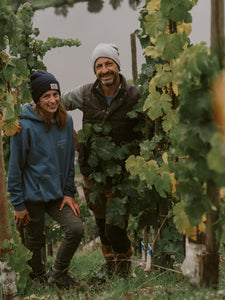
The Mosel is home to the most laser-focused and fine German Rieslings, but A.J. Adam's style diverges from the Mosel norm. Yes, his wines are built upon electrifying acidity and prototypical energy, but they also bring a broader, gossamer texture than the norm. They have a deep impact on the palate with density void of much weight––they are a trip.
His work with dry wines (Trocken & GG designations below) are particularly thrilling examples of Riesling from two of the best Mosel sites, Hofberg & Goldtröpfchen. Adam fastidiously farms just four hectares of 1950-planted vines in the villages of Dhron and Piesport. The incredibly steep Hofberg vineyard receives maximum sun exposure, moderated by the Dhron tributary below and the whipping winds coming from the Hunsrück Mountains. The estate's hallmark is maximum ripeness with a fierce dry extraction.
The lineup ranges from the bone-dry Grand Cru-level Hofberg and Goldtröpfchen to the ultimate value snapshot of his home village, the dry Dhroner Riesling Trocken. And, In Der Sengerei Feinherb has just the slightest kiss of residual sugar, perfect for your favorite Thai dish.Wines from 2001 have barely budged in their evolution, still showing fresh salinity and pale straw hues. A visit just before harvest in 2012 was my first exposure to these wines, and since then, each vintage has been accumulating in my cellar.
-
 Mosel Lace: Willi Schaefer Riesling
Putting aged Willi Schaefer wines on the website is one of the hardest things I do. These personal wines will only improve as the decades pass, while quantities will be long gone. Now, off-dry German Riesling clearly pairs well with spicy cuisine, my first pick for favorite Thai and Szechuan, but the magic of pairing with a pork shoulder and other heavier proteins always feels like it was destined.
Recently I was at Majordōmo L.A. and was so close to ordering a 1990 Mosel Riesling with the Bo Ssam pork shoulder. We went in another direction, but that just means that if this 2001 Dombprobst Spätlese below doesn't sell, then I'm going to just bring it back there next dinner.
The balanced Rieslings found in Mosel River Valley captivate at every turn, but for me, Willi Schaefer sits in a select category. These wines have long impressed me for their featherweight lightness and mineral spring purity. Along with J.J. Prüm, this is where the Mosel reaches its crescendo.
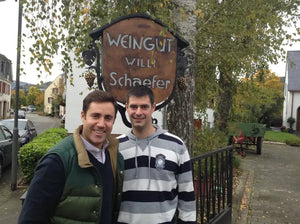
Schaefer's minute holding of 4.2 hectares focuses on two vineyards in the village of Graach—Himmelreich and Domprobst—both comprised of Devonian slate soils. Visiting Christoph Schaefer at his family's cellar, situated at the foot of the wickedly steep Domprobst Vineyard, was an unforgettable experience (See picture below).
In its youth, Himmelreich is the more approachable, fruity, and silky, with lots of citrus and white peach. Its nimble weightlessness personifies the magic of the Mosel. Domprobst, in comparison, is much deeper, spicy, and powerful. Earthy characteristics reveal themselves, slightly higher acidity, and the flavor profile moves toward yellow and red orchard fruit notes.


-
Blog July 07, 2025André Ostertag: Alsatian Sensation
-
Blog June 25, 2025Brilliance Along the Nahe: Emrich-Schönleber Dry Rieslings
