


.svg?v=162776257677185172071724397232)


Blog » Grand Cru
-
 Morey-Saint-Denis Icon: Hubert Lignier
Hubert Lignier is benchmark Morey Saint Denis, and one of Burgundy's most hallowed domaines. Over the last decade, Laurent Lignier has brought the domaine back to the heights of times past, under his father, where it was among the single most revered names in the Côte de Nuits. Always darker than the neighboring village of Chambolle-Musigny, the Morey wines from Lignier now show added lift and key freshness that have made them the envy of collectors throughout this new renaissance of late.
Lignier has been imported by Neal Rosenthal since the 1978 vintage, marking one of Neal's earliest and greatest successes. The style of the domaine has always been one that emphasized structure and distinct terroir-driven soil expression. Lignier's wines display the prototypical Morey rusted earth, black cherry, and a telltale hoisin note that the village is often associated with. However, as I mentioned, the style has recently shifted toward emphasizing the brightness of fruit and freshness as the foundation. -
 André Ostertag: Alsatian Sensation
Domaine Ostertag has long gone against the grain of Alsatian expectations, crafting dry, disciplined wines that still summon the sunshine that marks the region. His Fronholz and Grand Cru Muenchberg Rieslings especially imbue the transparency and purity of a mountain lake. These wines are a moment of clarity for Alsace!
Alsace is in the cool northeast pocket of France, and its protection from the Vosges Mountains means it receives the least amount of rainfall of any region. This abundant sunshine has long given Alsatian wines a rounded and golden orchard fruit quality, often with a dollop of residual sugar. However, several elements separate Ostertag from the norm. André studied viticulture in Burgundy and returned home in 1998 to employ organic and biodynamic principles in the vineyard. He also decided to ferment his Rieslings completely dry and age them in stainless steel.
Today, Alsace is famous for having the highest percentage of organic and biodynamic producers in France. While the quality at harvest couldn't be higher, I still find few producers that execute with the same sense of harmony that Ostertag is adored for. -
 Etna's Grand Cru Carricante: Benanti
Many have sought to express this distinct terroir from the eastern slope of the volcano, but one family is most synonymous with the greatest heights it has achieved. Etna doesn't have a classification system to rank estates or vineyards like Bordeaux and Burgundy, but if there was one Grand Cru white from these volcanic slopes perched over the Mediterranean, it would surely be Benanti's Pietra Marina.
Sourced from 80-year-old vines, Pietra Marina showcases Carricante at its most structured and age-worthy. While salinity is a hallmark of this grape variety, the defining element here is a tightly wrapped core of citrus, orange peel, and almond. There's a frame and touch of austerity to Pietra Marina that shows a discipline worlds apart from the more oxidative and plush style of wine commonly found in Milo. In the end, it's the vein of minerality and grip that appropriately put this benchmark bottling on the table with top Chablis and Burgundy.
Benanti's story began in the 1800s, but it was in 1988 that the estate began to garner fame. Giuseppe re-examined and questioned every aspect of Benanti's viticulture and winemaking, challenging conventional wisdom on clones and their compatibility in each parcel. Aging in stainless steel is a crucial element in keeping this southerly white wine so fresh and crisp. But make no mistake—it's these same qualities that give Pietra Marina its backbone to age in your cellar for many years to come. -
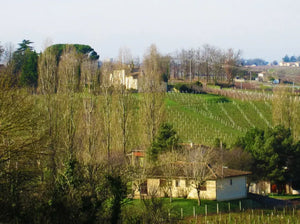 The Real St-Émilion Deal: Chateau Tertre de La Mouleyre
Chateau Tertre de La Mouleyre is not your typical Grand Cru Bordeaux, but it is the real Saint-Emilion deal. The 2016 vintage left me so in awe that I took every case allocated to California, with only 350 cases produced annually. Those are long gone, but I've gone deep on every release since then.
To place Chateau Tertre de la Mouleyre in the garagiste category would be a mistake. While they don't have the same typicity as grand chateaux in the classified growths, they marry the two philosophies for the perfect storm: Bordeaux ready to drink upon release with immaculate construction.
The blend is 80% Merlot and 20% Cabernet Franc from 50-year-old vines. 35% ages in large neutral cuve and 65% in new French oak barrels. I'm immediately inclined to describe this gem as old school and traditional, but its warmth and charm afforded by today's climate carry a level of finesse and complexity that is pure Grand Cru.
Tertre de la Mouleyre is named after the windmill atop the clay and limestone slope in St-Étienne de Lisse. From a young age, Eric Jeanneteau helped his grandfather in the vines, and his interest never diverged for a moment. After three degrees in viticulture and stints at grand chateaux, Eric returned home to implement a full organic regimen to his family's vines.


-
Blog November 10, 2025Morey-Saint-Denis Icon: Hubert Lignier
-
Blog July 07, 2025André Ostertag: Alsatian Sensation
